
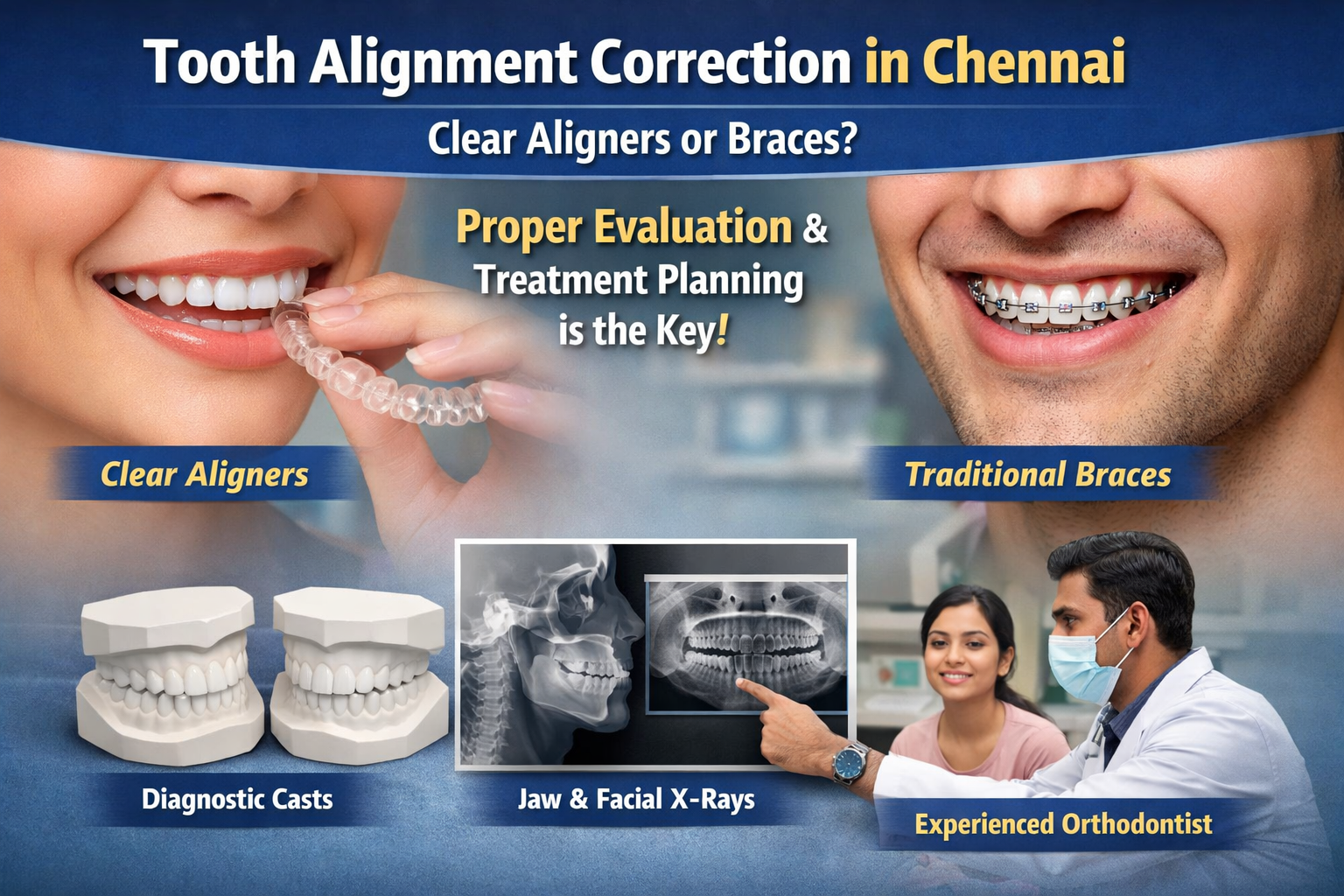
Tooth alignment correction has become increasingly popular among both teens and adults seeking a confident smile and better oral health. With modern orthodontics, patients today often choose between clear aligners and traditional braces. While both are effective, the most important factor for achieving excellent, long-lasting results is not just the appliance you choose — it is proper evaluation and treatment planning by an experienced orthodontist.
Let's explore your options and what truly ensures successful orthodontic treatment.
Clear Aligners vs Traditional Braces: Understanding Your Options
Clear Aligners
Clear aligners are transparent, removable trays designed to gradually move teeth into proper position.
Benefits of clear aligners:
- Nearly invisible appearance
- Removable for eating and cleaning
- More comfortable with fewer mouth irritations
- Ideal for mild to moderate misalignment
Best for:
Adults and teens seeking a discreet and convenient orthodontic solution.
Traditional Braces
Traditional braces use metal or ceramic brackets with wires to move teeth efficiently.
Benefits of traditional braces:
- Highly effective for complex orthodontic problems
- Precise control over tooth movement
- Suitable for severe crowding, spacing, and bite issues
Best for:
Patients with complex tooth and jaw alignment issues.
The Most Important Step: Proper Orthodontic Evaluation & Treatment Planning
Whether you choose clear aligners or braces, the success of your treatment depends on a comprehensive orthodontic evaluation and accurate treatment planning.
Why Proper Diagnosis Matters
Before starting tooth alignment correction, an orthodontist performs a detailed analysis that includes:
- Diagnostic casts (models of your teeth)
- X-rays of the jaw and face (cephalometric and panoramic X-rays)
- Facial and profile assessment
- Bite and jaw relationship analysis
These diagnostic tools help the orthodontist understand:
- How your teeth and jaws relate to each other
- The root position and bone support
- Growth patterns (especially in children and teens)
- The safest and most effective way to move teeth
Key Point:
This ensures your treatment is not only aesthetic but also functional and stable.
Why Treatment Planning by an Orthodontist Is Essential
An orthodontist is a dental specialist trained specifically in tooth movement and jaw alignment. Unlike general cosmetic alignment services, orthodontist-led treatment ensures:
- Personalized appliance selection (aligners or braces)
- Predictable tooth movement
- Reduced risk of complications
- Long-term stability of results
- Improved bite, speech, and chewing function
Clear Aligners or Braces: Which Is Better?
There is no one-size-fits-all answer.
Clear aligners are better if:
- You want a discreet solution
- Your case is mild to moderate
- You are disciplined about wearing aligners
Braces are better if:
- You have severe crowding or jaw misalignment
- You need precise control over tooth movement
- You want faster correction for complex cases
👉 The right choice can only be made after a professional orthodontic evaluation.
Best Results Come From Planning, Not Just Appliances
Many patients focus only on whether to choose aligners or braces. However, the real key to successful tooth alignment correction lies in:
- ✔ Accurate diagnosis
- ✔ Proper use of X-rays and diagnostic casts
- ✔ Individualized treatment planning
- ✔ Orthodontist-supervised care
Remember:
This approach ensures your smile is not just straight — but healthy, stable, and functional.
Frequently Asked Questions
Which is better: clear aligners or traditional braces?
A: Both are effective. The best option depends on your specific dental condition, which can only be determined after orthodontic evaluation.
Do I need X-rays before tooth alignment treatment?
A: Yes. X-rays of the jaw and face are essential to assess bone, roots, and bite for safe and effective treatment.
Can general dentists do orthodontic treatment?
A: While some offer aligners, an orthodontist has specialized training to manage complex alignment and bite issues safely.
How long does tooth alignment correction take?
A: Treatment duration typically ranges from 6 months to 2 years depending on complexity and appliance type.
Final Thoughts
When it comes to tooth alignment correction, choosing between clear aligners or traditional braces is important — but choosing the right orthodontist and undergoing proper diagnostic evaluation is far more critical.
For the best, safest, and longest-lasting results, always opt for:
👉 Orthodontist-led treatment with proper diagnostic casts and jaw and facial X-rays.
Remember:
A well-planned smile is a beautiful and healthy smile.
Ready to Get the Smile You Deserve?
Schedule a comprehensive orthodontic evaluation at Dr. Dev's Dental Hospital and discover the best tooth alignment solution for you.
Schedule a Consultation