For many, the phrase "wisdom tooth removal" conjures up images of swollen cheeks and days of misery. It is one of the most common dental fears, yet it is also one of the most routine and predictable procedures in modern dentistry.
If you have been told you have an impacted wisdom tooth, you might be tempted to ignore it, especially if it isn't hurting right now. However, delaying treatment can lead to significant oral health issues down the road.
In this guide, we will break down why this minor surgical procedure is smoother than you think, bust the scary myths, and explain why proactive treatment is the best choice for your smile.
What Does "Impacted" Actually Mean?
When dentists say a wisdom tooth is impacted, they mean the tooth has failed to erupt (break through the gum) fully into its expected position. Because wisdom teeth are the last to arrive—usually between ages 17 and 25—there is often no room left in the jaw.
- Partial Impaction: The tooth breaks through the gum only slightly. This creates a flap of gum tissue that traps food and bacteria, often leading to infection.
- Full Impaction: The tooth remains completely stuck within the jawbone, potentially growing at odd angles against your other teeth.
Quick Answer:
An impacted wisdom tooth is a third molar that doesn't have enough room to grow naturally, causing it to get stuck in the gum or jawbone.
It's a Minor Procedure, Not Major Surgery
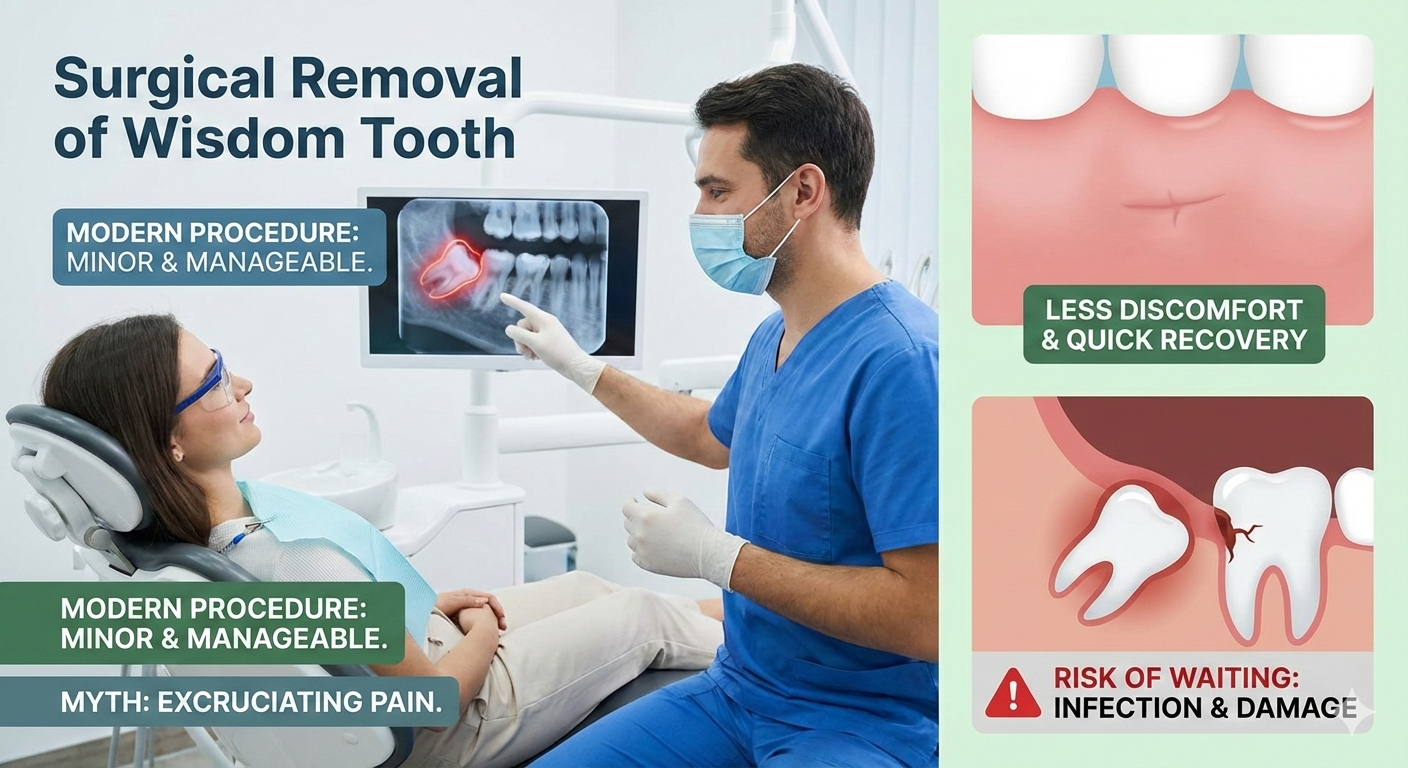
One of the biggest misconceptions is that wisdom tooth extraction is a dangerous or highly invasive operation. In reality, it is a standard, minor oral surgery performed millions of times a year.
What You Can Expect:
- Speed: In many cases, removing a tooth takes less than an hour—sometimes only minutes depending on the complexity.
- Anesthesia: You will be numbed with local anesthesia, and options for sedation (like laughing gas or IV sedation) are often available to ensure you "sleep" through the appointment.
- Same-Day Release: This is an outpatient procedure; you go home the same day to recover in your own bed.
Debunking the Myths: Is it Really That Painful?
Let's address the elephant in the room: Discomfort.
Myth: Wisdom tooth removal is excruciatingly painful.
Fact: You will feel no pain during the surgery thanks to anesthesia.
Myth: Recovery takes weeks of agony.
Fact: While some swelling and soreness are normal for 3 to 4 days, modern pain management techniques make recovery very manageable. Most patients are surprised at how much less discomfort they feel compared to the horror stories they've heard.
Myth: If it doesn't hurt, I don't need to remove it.
Fact: Pain is a late symptom. Damage to bone and adjacent teeth often happens silently before you feel a thing.
The Risks of Waiting: If Not Treated, Problems Arise
Choosing to skip the surgery because you aren't currently in pain is a risky gamble. Untreated impacted wisdom teeth are ticking time bombs for your oral health.
If left untreated, they can cause:
- Damage to Adjacent Teeth: The impacted tooth can push against the second molar, damaging its roots or causing decay that is impossible to fill.
- Cysts and Tumors: Fluid-filled sacs (cysts) can form around the undetected tooth, hollowing out the jawbone and damaging nerves.
- Pericoronitis: A painful infection of the gum tissue surrounding a partially erupted tooth.
- Crowding: While controversial, many orthodontists believe pressure from wisdom teeth can contribute to teeth shifting after braces.
Summary: A Smart Move for Your Health
Surgical removal of a wisdom tooth is a preventative strike against future pain and expense. It is a minor procedure with a high success rate and a recovery period that is far easier than the complications of leaving the tooth in place.
Don't let myths prevent you from taking care of your health. If your dentist recommends removal, trust that it is the best way to protect your smile for the long term.
Need a Wisdom Tooth Evaluation?
Our experienced dental team at Dr. Dev's Dental Hospital uses the latest technology to ensure comfortable, efficient wisdom tooth removal. Schedule a consultation today to discuss your options.
Book Your Consultation